


The setup
A 2D artist joins your studio as a contractor. Three years later, her week looks like this: 10am standups, a studio laptop, a studio Slack account, tasks handed down by the art lead, no other clients, no end date in the contract. Then the project gets cancelled. She’s told on a Friday, and Friday is her last day. No notice, no severance, nothing.
Feels like a story about the artist getting a raw deal. It is. It’s also a bill your studio hasn’t priced yet.
For most of the last decade, that bill stayed theoretical. Courts were slow, and studios had plenty of warning. In July 2026, one of Europe’s biggest gamedev markets changed that.
What changed in July 2026
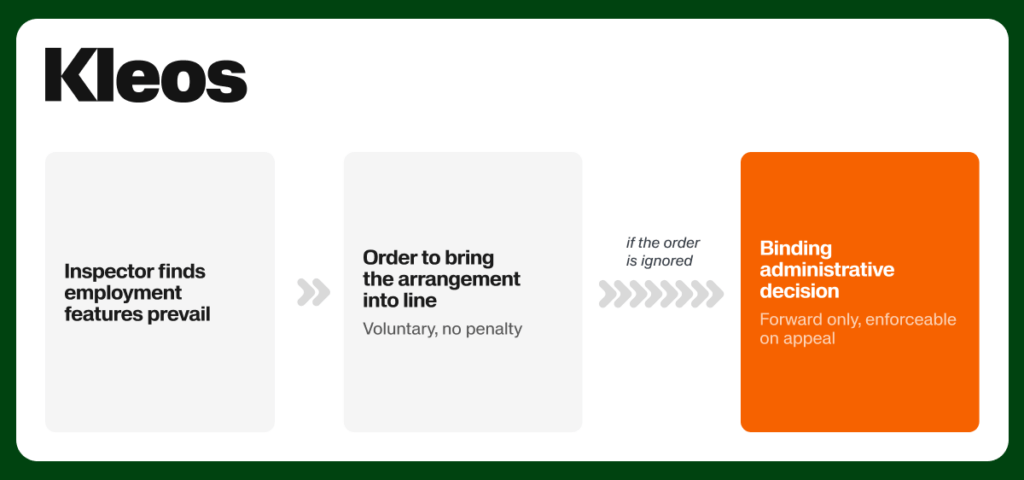
Since 8 July 2026, a Polish labour inspector can rule your contractor is really an employee, without going to court first. It’s a two-step process: the inspector first orders you to put the person on a proper employment contract, and only if you ignore that does a binding decision follow. That’s a big shift, and Poland matters — a huge share of European gamedev runs on Polish B2B contractors.
The part people mix up: the inspector’s decision only bites going forward, from the day it’s issued. The money runs backwards, but separately, through the courts — taxes and contributions reaching up to five years, plus whatever the worker claims for themselves.
There’s an amnesty, and it has a real deadline: 8 July 2027. Convert a pre-existing B2B contract into a proper employment contract by then, voluntarily, and PIP won’t fine you for the past misclassification. Read the small print, though: it waives PIP’s own fines and nothing else. Back taxes, contributions and the worker’s claim for holiday or severance all survive it, and rewording the B2B contract doesn’t count — the person has to actually move onto employment.
The test itself didn’t change — only who gets to apply it, and how fast.
The rest of the world is catching up
The same shift is happening across the map:
US — leaning harder on the economic-reality and ABC tests, with the IRS now sharing contractor data across agencies.
Canada — auditing tech and creative hires in particular.
Germany & France — stepped-up labour inspections.
Brazil — labour courts handing out five-figure fines per misclassified worker.
And tax authorities are increasingly comparing notes across borders, so a gap in one country doesn’t stay in one country.
The test: which side of the line are you on?
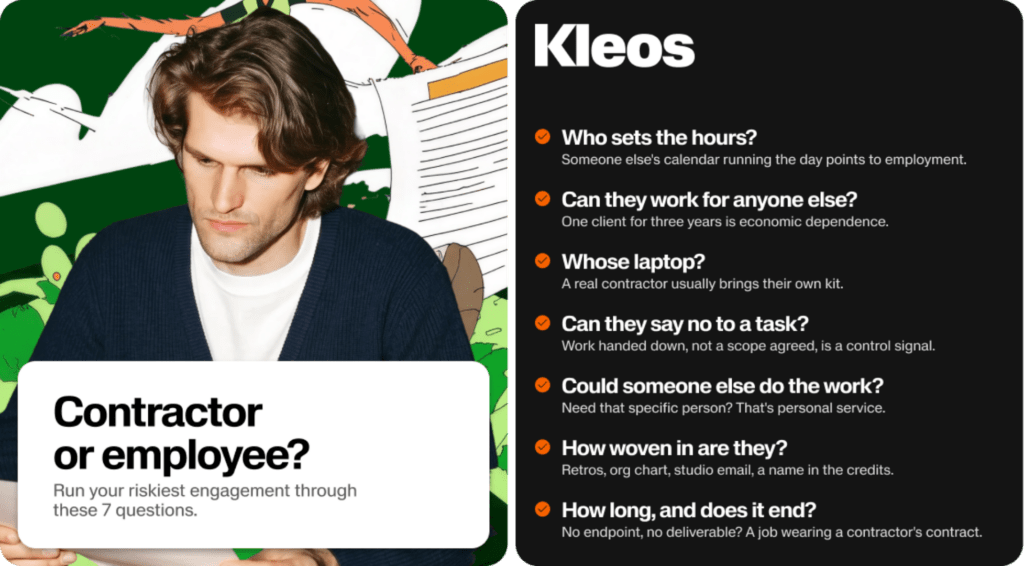
There’s no clean scoring system, whatever anyone’s trying to sell you. Regulators look at the whole picture of control and dependence, and one strong signal can outweigh three weak ones. But the questions are the same almost everywhere.
We’ve put them in the checklist below — run your riskiest engagement through it.
“But the contract says…” and other things that won’t help
“But the contract says they’re not an employee.”
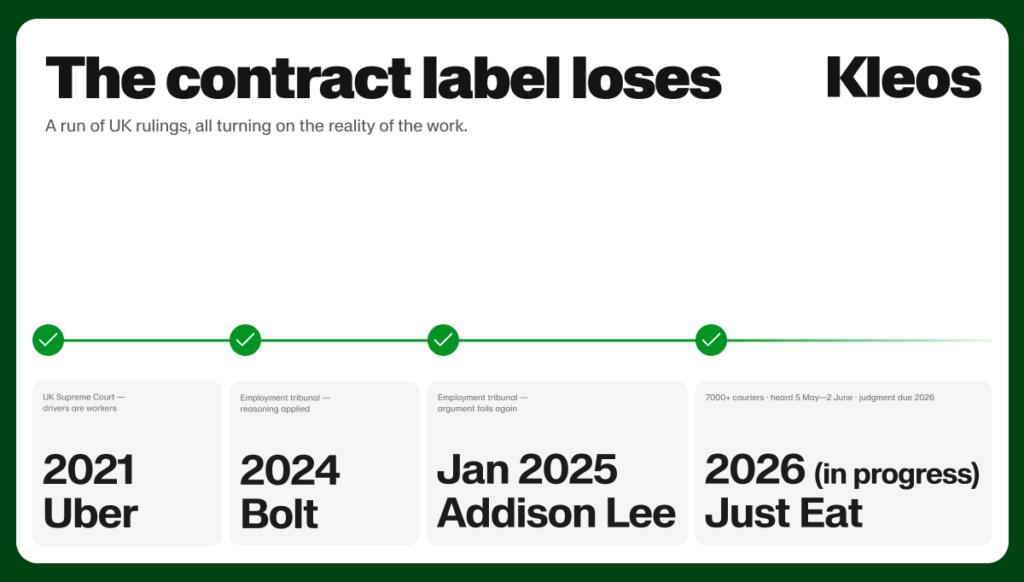
Nearly every one of these contracts has that line. It’s worth almost nothing. Inspectors and judges read what actually happened, not what the document calls it — the contract is just one piece of evidence. A run of UK cases has turned on exactly this, and one is being decided right now.
“But the contractor asked for it.”
Plenty of specialists prefer B2B for the tax treatment and suggest it themselves. That’s real, and it’s why the model spread. It’s still not a shield for the studio, and it won’t stop the same person filing a claim two years later.
Who actually starts the trouble
Almost everyone assumes the tax office. It usually isn’t. Three triggers cover most of what happens.
A bad exit. The big one, by a mile. Someone gets dropped after three years with no notice, feels wronged, and calls a lawyer. The claim doesn’t come from an authority. It comes from the person you just let go. How you end a relationship matters as much as how you set it up.
Due diligence. You raise a round, sign a publisher, or get acquired, and someone on the other side finally reads your contractor arrangements properly. The cost here isn’t a fine. It’s a haircut on your valuation, an indemnity you have to give, an escrow holdback, or a deal that stalls while you clean up.
The wrong country’s authority. Studio in Cyprus, artist living and working in Poland. The question gets asked by Polish authorities, about the Polish taxpayer, under Polish rules. Where your company is registered barely matters. Relocated specialists in particular almost never think about this.
What it costs
- If you’re the studio
The dangerous bit is what piles up in the background. Reclassification through the courts can reach back years: contributions, income tax, holiday, overtime, penalties and interest, the whole period at once. You don’t adjust from today. You inherit a bill.
Then the part nobody prices: your IP.
If the engagement is defective, the assignment of rights can become arguable — it hangs on whether the contract transferred them cleanly, and a contract that misdescribes the whole relationship is a weak place to stand. Mid-acquisition, an artist with a plausible claim on shipped assets can be a hole in the deal. It cuts both ways, though: in countries where employee IP passes to the employer automatically, reclassification can actually strengthen your position.
Which way it lands depends on the jurisdiction and how your contracts were drafted.
- If you’re the specialist
As a contractor you get none of the safety net: no notice, no severance, no paid leave, no sick pay, no protection from being dropped, and usually no pension or social-insurance record building up. Project ends, it ends that day.
If it’s later ruled employment, some of that becomes claimable after the fact. Good to know before you sign, and the day you’re shown the door.
But don’t assume reclassification is a win for you. Depending on the country, you can end up personally liable for the unpaid contributions, lose the tax treatment that made B2B worth it, and lose your business deductions.
Both sides chose B2B, and both sides are exposed by it now. There’s no villain in this story, just a shortcut that caught up with everyone who took it.
What to actually do
Not “put everyone on payroll”. Gamedev runs on project cycles, and a studio that can’t scale down after a milestone doesn’t last. The real options:
- Fix the contract engagement. Defined scope and end, result-based pay, their own tools, no management integration. Cheapest fix, and it works for genuinely project-shaped work.
- Use a Contractor of Record for the real contractors. A CoR becomes the contracting party on your behalf — it signs the contractor, runs the classification check, and handles the paperwork properly instead of pulling it from a template. The work stays independent; the compliance stops being your problem.
- Employ the people who are actually employees. Your core long-term people are the highest-risk group, and the worst fit for a contract. Normally, employing someone abroad means opening your own legal entity there — months of setup, legal fees, ongoing admin, for one or two hires. An Employer of Record skips all that: the EoR is the legal employer on paper, so you can put someone on a proper local payroll without opening anything.
That’s the half Kleos does: CoR for your real contractors, EoR for your real employees, both handled properly across 200+ locations, so you’re not the one guessing which is which.
One honest tension, worth naming rather than pretending away: production is collaborative, pipelines are shared, and an outsourced artist who never joins a review call is a worse artist for it. The compliant setup and the good-production setup pull against each other. That’s exactly why these arrangements drift, quietly, instead of ever being decided.
Whichever route you take, the first step is the same: audit what you’ve already got before someone else does it for you. Many global firms say the same thing — audit before the inspection, not after, because the decision now lands before you ever reach a court.
If you’d rather not do that alone, that’s something Kleos does for free: a review of how your team setup is structured and where it’s exposed, jurisdiction by jurisdiction. Book a review.
Published in partnership with Kleos. Kleos handles contracting, documentation, compliance and payments for distributed teams in 200+ countries.
General information, not legal advice. Classification rules vary by country and change fast, so take specific advice before you act.


